
DOL OPINION LETTER PROVIDES IMPORTANT REMINDER ABOUT TIME CLOCK ROUNDING
In May, the U.S. Department of Labor’s Wage and Hour Division issued an opinion letter addressing certain timekeeping and compensation practices. While the opinion letter does not state any new enforcement positions, it does provide a good reminder to employers, business owners, and HR professionals regarding timeclock rounding and the compensability of pre-shift work time.
What are DOL Opinion Letters?
Opinion letters are official written opinions from the U.S. Department of Labor (DOL) on how a law applies in specific workplace scenarios. They can be requested by anyone and typically concern situations where the application of the law is unclear.
While opinion letters provide a reliable baseline for compliance, they do not have the force of law in the same way as statutes or regulations. Because opinion letters are based on specific facts, employers should be careful not to treat them as blanket approval for every workplace practice. Instead, they should use them as guidance while considering whether their own facts are similar.
What Employers Can Learn from DOL Opinion Letter 2026-8
The opinion letter, FLSA2026-8, addressed several questions submitted by a public hospital regarding its timekeeping and compensation practices, including whether pre-shift work and time waiting at the timekeeping station are compensable, and whether its timeclock rounding policy complied with federal law.
The Hospital’s Timekeeping and Rounding Practices
In an effort to provide flexibility and avoid tardiness, the hospital, which employs approximately 18,000 non-exempt workers, allows employees to clock in up to 7 minutes early and clock out up to 7 minutes after the end of their shift. The timekeeping system recorded employee clock-in and clock-out time entries, but rounded those early clock-ins and/or late clock-outs to the employee’s scheduled working hours. Meaning, if an employee’s shift starts at 7:00am and they clock in anytime from 6:53am onward, the timeclock rounds to the 7:00am shift start time.
Regardless of when they clock in, many hospital employees engage in pre-shift work immediately after they clock in. That means, for employees who clocked in during that 7-minute rounding window, were not receiving pay for that pre-shift work.
The hospital acknowledged in its request that its timekeeping system was capable of tracking the exact time of clock-ins and clock-outs. Nevertheless, it chose to engage in timeclock rounding to avoid employees being late due to the bottleneck that occurred due to the limited number of timekeeping stations.

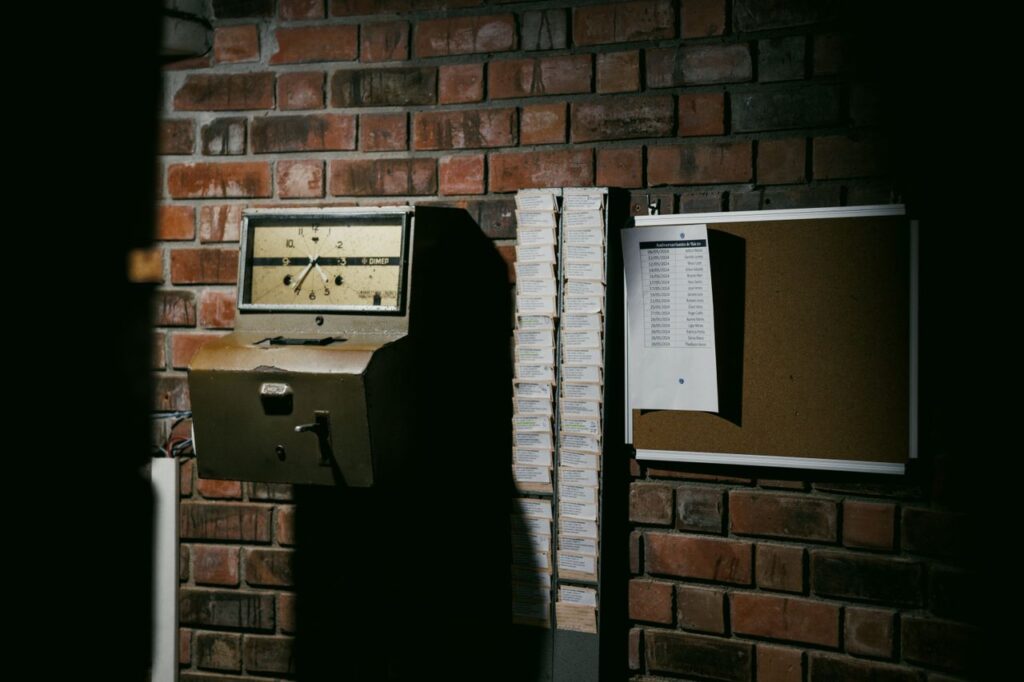

Timeclock Rounding is Permissible, Just Not Like That
The Fair Labor Standards Act (FLSA) permits timeclock rounding to the nearest fraction of an hour (nearest 5 minutes, 6 minutes, or quarter-hour) but recognizes that the practice can, if not structured appropriately, result in the failure to compensate employees for all time worked.
For timeclock rounding to be compliant with the FLSA, the practice must be neutral on its face and average out over time to not consistently favor the employer. Meaning, timeclock rounding must sometimes favor the employee. A compliant timeclock rounding practice should average out in the long term.
NOTE: Nevada’s Labor Commissioner has also recognized that timeclock rounding is permissible when it does not result, over a period of time, in a failure to compensate employees properly for all time worked.
In this instance, the hospital’s timeclock rounding practice consistently favored the hospital. Whether an employee clocked in early or clocked out late, they were only being paid for their scheduled shift. Since we know many employees were engaged in pre-shift work after clocking in, the hospital’s practice effectively erased small amounts of compensable time whenever employees began working before the scheduled start of their shift or continued working after the scheduled end of their shift.
The opinion letter does note that no information was provided that would explain what the timeclock rounding practice was when an employee arrived late for their shift. If the same practice of rounding back to the scheduled shift time occurred, then perhaps the opinion letter would have taken a more favorable stance on the hospital’s timeclock rounding practice, assuming that it averaged out over time.
The opinion letter also emphasized that the hospital’s timekeeping system was capable of recording employees’ exact clock-in and clock-out times. That detail matters because employers who have access to precise time records may have a harder time justifying a rounding practice that results in employees losing pay for work actually performed.
Important Employer Takeaways
While timeclock rounding is permissible, it requires diligence on the part of employers to ensure it is being done in compliance with the law. To ensure timekeeping practices are compliant, employers should:
Review Timekeeping Practices to Ensure Compliance with State and Federal Law
While timeclock rounding is not unlawful, if the practice is not facially neutral (meaning fair and impartial on its surface) and does not average out over time (meaning it favors employees as often as it favors the employer), an employer can find themselves subject to costly wage and hour litigation for underpayment.
Audit Time Records to Ensure All Employees are Paid for All Time Worked
The only way for an employer to be confident that its timeclock rounding practices are compliant with state and federal law is to audit its time records. Therefore, employers should periodically conduct an audit on their time records to ensure that all employees are being paid for all time worked and that none are systematically undercompensated as a result of their timeclock rounding practices. Audits can also help employers identify patterns involving late punches, unauthorized hours, missed breaks, or inaccurate hour calculations that may affect payroll processing and employee compensation.
Address Operational Limitations on Tracking Employee Time
Operational challenges do not excuse an employer from paying employees for all time worked. If employees are clocking in early or out late because of limited timekeeping stations, shift-change congestion, or other workplace barriers, employers should address those issues directly rather than relying on rounding practices. Some solutions may include adding timekeeping stations, staggering shift start times, using electronic or mobile timekeeping tools, or adjusting procedures so employees can accurately record all time worked.
Utilize Exact Timekeeping When Possible
If the timekeeping system can track precise clock-in and clock-out times, employers should consider whether rounding is necessary or defensible. Employers should not continue using rounding simply because it has always been their practice. They should evaluate whether paying employees based on actual recorded time would better ensure compliance, reduce disputes, and demonstrate a good-faith effort to compensate employees for all hours worked.
Final Thoughts for Employers
DOL Opinion Letter FLSA2026-8 serves as an important reminder that timekeeping practices should be reviewed regularly for compliance. Even long-standing practices may become problematic when they no longer reflect current operations, available technology, or ever-changing legal requirements.
By: Audra L. Parton, JD

Mailing List Sign Up Form
Fill out this mailing list sign up form to receive monthly email updates on the latest NAE news, HR issues, special events, training dates and more!